Innovative Ways to Capture AI-Discovered Leads
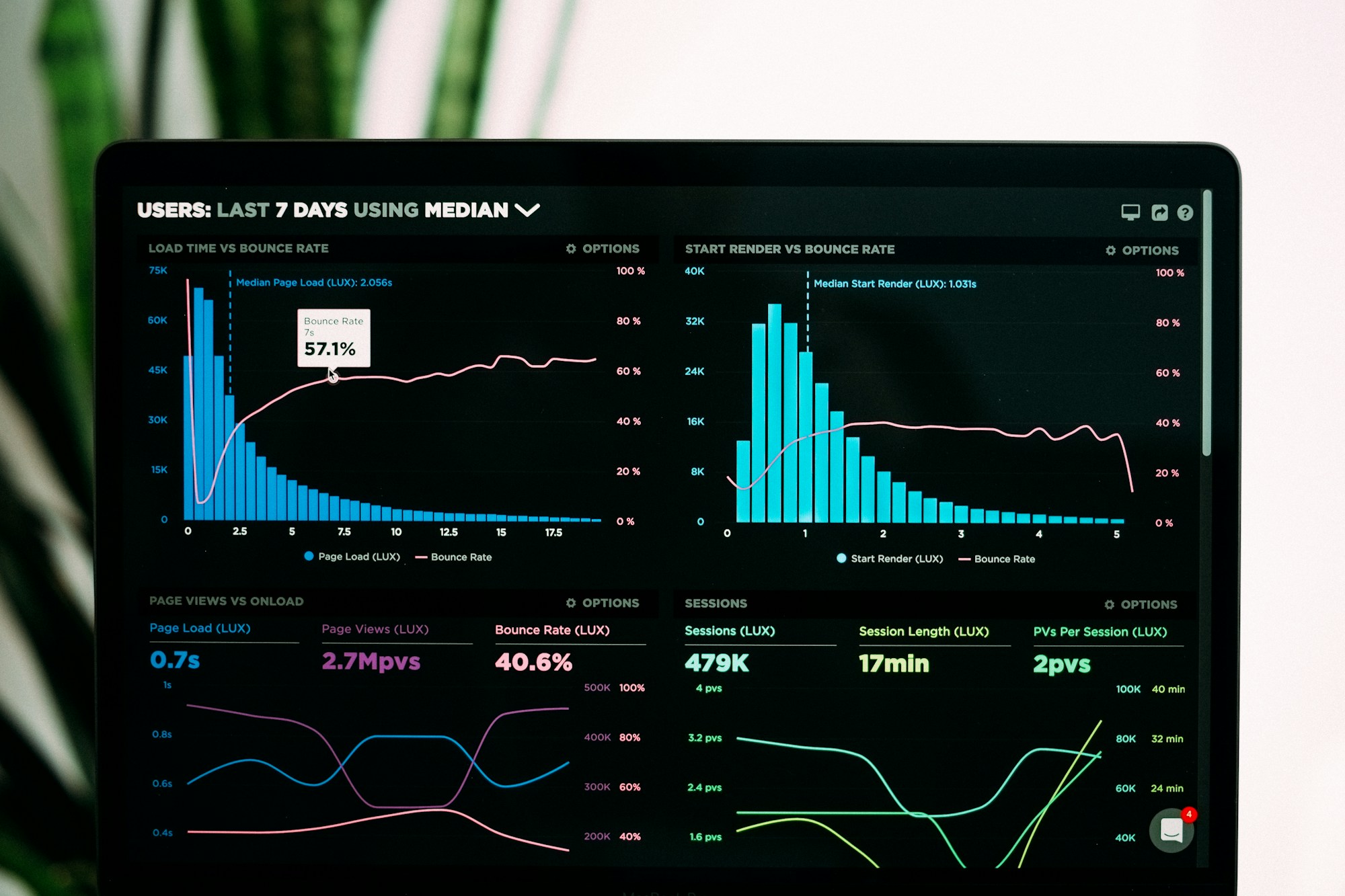
A founder looks at the search dashboard and sees the line flatten. Organic sessions are down, rankings wobble, and the instinct is to assume demand is slipping. Then the sales team says something that doesn't fit the data: the leads coming in lately are better. More informed. Closer to a decision. Easier to close.
That disconnect is not a fluke. It's the signature of a shift that most measurement setups can't see yet. AI assistants - ChatGPT, Perplexity, Gemini - are now doing part of the buying research before anyone ever lands on your site. By the time a prospect arrives, the comparison has already happened. The brand got recommended (or didn't), got described accurately (or didn't), got cited as the answer (or got skipped for a competitor).
These are AI-discovered leads. They don't look special in your analytics - many of them show up as direct or branded search - but they behave differently, and they're worth disproportionately more. This post is about how to find them, how to treat them, and how to build a system that connects the dots most founders are still missing.
Are AI-discovered leads actually better than other traffic?
Yes. Adobe found AI referrals converted 31% better than other sources during the 2025 holiday season, with revenue per visit up 254% and visitors 33% less likely to bounce. These prospects research inside an assistant first, so they arrive more informed and closer to a decision.
This isn't speculation. The early data is consistent and it points one direction.
Adobe found that during the 2025 holiday season, AI referrals converted 31% better than other traffic sources - nearly doubling year over year - while AI-driven revenue per visit climbed 254%. Those visitors were also 33% less likely to bounce immediately, a signal of stronger intent and content relevance. Google has separately said that clicks originating from AI Overviews tend to be higher quality, with users more likely to stick around.
The behavior change underneath those numbers is just as telling. An IBM and National Retail Federation study found that 45% of consumers now turn to AI somewhere in their buying journey - to research products, interpret reviews, and hunt for deals. BCG reported that shopping-related Gen AI use grew 35% between February and November 2025, and that shoppers find its input decisive and say it makes them more confident in their purchase decisions.
Read those two facts together. Nearly half of buyers are consulting AI, and when they do, they arrive more decided and more willing to act. The research phase that used to happen across ten browser tabs now happens inside one assistant - and whichever brands that assistant surfaces are the ones that make the shortlist.
So the question stops being "how much traffic did search send me?" and becomes "how often did AI use my site to shape the decision, and did I notice when the resulting lead showed up?"
Why do most analytics setups miss these leads entirely?
Because the default scoreboard - rankings, sessions, last-click conversions - assumes the click is the moment of discovery. With AI, discovery happens upstream and the click is the end. Worse, much AI-influenced traffic carries no clean referrer, arriving as direct or branded search a day or two later.
Here's the trap. The default scoreboard was built for a world where the click was the moment of discovery. In the AI world, the discovery already happened upstream. The click is the end of a process you never measured.
Worse, a lot of AI-influenced traffic doesn't even carry a clean referrer. Some arrives with a visible source (chatgpt.com, perplexity.ai), but plenty shows up as direct or as branded search a day or two later - the prospect heard about you from an assistant, then typed your name into Google. If you're only counting referrals with an obvious AI source, you're seeing a sliver of the real influence.
The platforms are starting to catch up. Microsoft now offers AI Performance reporting in Bing Webmaster Tools - showing citations, grounding queries, and visibility across Copilot and Bing's AI summaries - while Google says AI Overviews and AI Mode are already folded into standard Search Console reporting. In other words, some of your AI visibility may already be hiding inside your normal search data.
That's the measurement gap. And closing it is where the innovative work starts.
How do you identify an AI-discovered lead?
Detect it in two layers. First, flag referrers from known AI assistant domains like ChatGPT, Perplexity, and Gemini in GA4. Second, read crawl and bot signals from Cloudflare and server logs, then correlate AI crawler activity against the branded and direct leads that follow weeks later.
Everything begins with identification. You cannot give a lead special treatment, and you certainly cannot prove ROI, if you can't tell that AI was involved in the first place.
There are two layers worth detecting:
Referrer detection. Flag visits arriving from the known AI assistant domains - ChatGPT, Perplexity, Gemini, and the rest. This is the easy, visible layer, and every founder should set it up today. In GA4 you can build a referrer-based segment or channel grouping; the list of source domains is small and stable enough to maintain by hand.
Crawl and bot signals. This is the layer most people skip, and it's the more interesting one. Cloudflare and your server logs show which crawlers are discovering your brand - Googlebot, Bingbot, and increasingly the AI crawlers that feed the assistants. By cross-referencing that bot activity against the human traffic and conversions that follow, you start to see correlation: the AI systems crawl a particular page, and weeks later qualified leads arrive through branded or direct search. No single log proves it, but the pattern is real.
The point of identification isn't vanity. It's that an AI-discovered lead is a different kind of lead - further along, higher intent - and it deserves a different response.
What should happen once a lead is identified as AI-discovered?
Two things, and neither is showing the visitor a different page. Trigger automations calibrated to someone who already did their research, and alert your team - not the visitor - through Slack or email so a rep can respond fast. The innovation lives in the alert-and-automation layer, not the SEO layer.
Once a lead is identified as AI-discovered, two things should happen - and notice that neither of them is "show the visitor a different landing page."
Trigger the right automations. Tailored messaging, AI-driven follow-up flows, automatic emails calibrated to someone who already did their research. A lead who found you by asking Claude "what's the best brand intelligence tool for founders?" does not need the 101 explainer. They need the comparison detail and the next step. The flow should meet them where the assistant already left them.
Alert your team - not the visitor. This is a deliberate design choice. The visitor sees nothing different; surprising someone with "we know you came from ChatGPT" is creepy and counterproductive. Instead, the people running the business get alerted - through email, Slack, wherever they live - that a high-intent, AI-influenced lead just landed. The rep who picks up that signal and responds fast is the one who closes the 31%-better-converting visitor before a competitor does.
The innovation here is in the alert-and-automation layer, not the SEO layer. Most founders pour their energy into the front end (ranking, content) and leave the back end (detection, routing, response) completely manual. The leverage is on the back end.
Should you optimize your content for AI citations?
Not as your primary goal. Optimize for genuine value to the user instead. Trust builds authority, and citations follow as a lagging indicator - not a lever you pull directly. Chasing citations first produces brittle, gameable content that AI systems are getting better at ignoring every month.
Here's where I'll plant a flag that runs against most of the AEO/GEO advice flying around right now.
The dominant message in 2026 is optimize for citations - engineer your pages so AI systems quote you, chase citation share as the new ranking. I think that's the wrong primary goal, and it'll age the way keyword-stuffing aged.
Don't optimize for citations. Optimize for value to the user. It's the same lesson SEO taught us a decade ago: genuine value builds trust, trust builds authority, and the citations follow naturally as a consequence. If you invert that - chase the citation first - you get the same brittle, gameable content that AI systems are getting better at ignoring every month. The brands AI recommends are the ones that actually answer the question cleanly and earn the trust. Citations are a lagging indicator of value, not a lever you pull directly.
So if citation share isn't the goal, what is? Two things:
- Identification - knowing whether a given lead came through an LLM or AI assistant at all. This is the foundation, and most companies haven't built it.
- Connecting the data sources - assembling the full picture, because no single source can tell you the truth.
Citation data still matters, to be clear. It's a real signal of whether AI systems trust you. But it's genuinely hard to get - there's no clean dashboard handed to you - which is exactly why it's the part of the puzzle that takes deliberate research to surface, rather than the part you optimize toward first.
Why does connecting the data sources matter more than any single signal?
Because any one signal is a fragment. DataEase AI stitches together six layers - crawl and bot data, web analytics, search visibility, AI citation signals, off-site brand mentions, and form conversions - into a brand presence graph that reveals which sources shape demand. No single source proves the story; together they reveal it.
Here's the heart of it. Any one signal is a fragment. The story only appears when you stitch them together. At DataEase AI, the layers we pull together look like this:
- Crawl and bot signals - Cloudflare, server logs, and bot activity reveal which crawlers are discovering the brand: Googlebot, Bingbot, AI crawlers, SEO tools, other discovery systems.
- Website and analytics signals - GA4 and similar tools show landing pages, referrers, branded search, direct visits, conversion paths, and which content actually brings people in.
- Search visibility signals - Google Search Console and Bing data show what people search for, which pages appear, where the brand is weak, and which queries already have demand.
- AI visibility and citation signals - How the brand shows up across ChatGPT, Perplexity, and Gemini: whether it's mentioned, recommended, ignored, misdescribed, or cited.
- Brand mention signals - Reddit, Quora, LinkedIn, directories, review sites, podcasts, articles, and comparison pages, where the brand gets discussed or validated off its own site.
- Forms and conversions - Demo requests, signups, and the rest of the actual pipeline.
Stitch those together and you don't just get a unified lead profile. You get a brand presence graph - a map of which sources are shaping how the market understands your company, which sources AI systems trust, which topics create discovery, which competitors are appearing in your place, and which of those signals eventually connect to pipeline.
A concrete pattern makes it tangible. Cloudflare shows that AI crawlers are repeatedly visiting one blog post. Analytics shows that same article drives a spike in branded search. Citation research reveals that Perplexity cites that article when it answers category-level questions. And the CRM shows several qualified leads arriving afterward through direct or branded search.
No single source proves the story. Together they reveal it:
This content isn't just getting traffic. It's teaching AI systems and buyers how to understand us - and that visibility is starting to influence demand.
That's the insight worth building toward.
How do you build an AI-lead tracking foundation for under $25 a month?
Put Cloudflare in front of your domain for the free crawler layer, use GA4 for referrers and conversions, and verify in Google Search Console and Bing Webmaster Tools for search visibility. Add directory profiles for off-site mentions. A founder can stand up the whole foundation in a weekend for under $25 a month.
You don't need to buy anything to start. Most of this stack is free or close to it, and a founder can stand up the foundation in a weekend. Here's the under-$25/month roadmap:
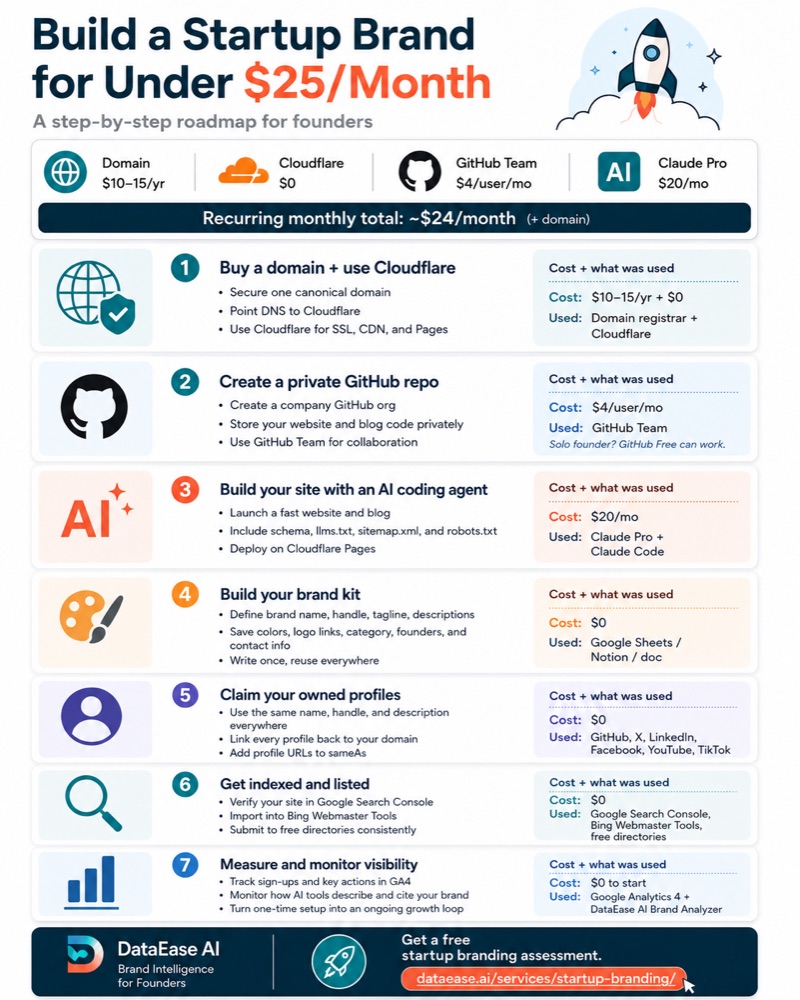
The pieces map almost one-to-one onto the data sources above:
- Cloudflare in front of your domain gives you the crawl-and-bot layer for free.
- A site built and deployed cleanly (with schema,
llms.txt,sitemap.xml, androbots.txt) makes you legible to both search and AI systems. - GA4 gives you the referrer and conversion layer - set up your AI-source segment here.
- Google Search Console and Bing Webmaster Tools give you the search-visibility layer for free, and Bing's newer AI Performance reporting even surfaces citation activity.
- Consistent directory and profile claiming builds the off-site mention layer.
Concretely, the first moves any founder can make tomorrow:
- Put Cloudflare in front of the site and start watching which crawlers - including AI crawlers - show up in the logs.
- Build a GA4 segment that flags the known AI-assistant referrer domains, and watch how those visitors convert versus everyone else.
- Verify in Search Console and Bing Webmaster Tools, and check Bing's AI Performance report for early citation signals.
- Wire one simple alert - a Slack or email ping when a lead arrives from an AI source - so your team can respond fast.
- Write genuinely useful pages that answer the commercial questions buyers actually ask (pricing, comparisons, reviews), because those are the pages AI systems cite.
For a deeper walkthrough of this exact stack, see our three-part guide on how to launch a startup brand for under $25 a month.
Where does the DIY approach to capturing AI leads break down?
At correlation. You can flag referrers, read Cloudflare logs, and check Search Console by hand, but you cannot manually stitch all six layers into one timeline - the Tuesday crawl, the Thursday branded-search spike, the Perplexity citation, the demo that closed two weeks later. Citation data has no clean export at all.
The manual setup gets you surprisingly far - and then it stops.
You can flag AI referrers in GA4 by hand. You can read Cloudflare logs. You can check Search Console. What you cannot do manually is stitch all six layers into a single coherent graph - correlate the crawler that visited last Tuesday with the branded-search spike on Thursday with the Perplexity citation with the demo request that closed two weeks later. Each source lives in its own dashboard, in its own format, on its own timeline. Holding the whole pattern in your head across all of them, continuously, is not feasible by hand.
And citation data - the signal that tells you whether AI systems actually trust and surface you - has no clean export at all. Getting it requires deliberate research: probing the assistants, tracking how your brand and your competitors appear across category queries, and watching how that changes over time.
That's the line. Detection and alerting, you can DIY. The unified brand presence graph and the citation research behind it are where a tool earns its place - and that's exactly what the DataEase AI Brand Intelligence Platform is built to do: connect all of those sources into one picture, run the citation research that's otherwise inaccessible, and show you not just that traffic arrived, but how AI is shaping the way your market understands you.
What's the bottom line on capturing AI-discovered leads?
AI-discovered leads are already in your funnel, converting 31% better than anything else, and most founders can't see them. Capturing them isn't about gaming citations - it's about earning trust through value, identifying when AI sent someone, and connecting enough signals to understand the full story.
AI-discovered leads are already in your funnel, converting better than anything else, and most founders can't see them. Capturing them isn't about gaming citations - it's about earning trust through genuine value, identifying when AI sent someone your way, and connecting enough signals to understand the full story. Build the free foundation today. When you're ready to see the whole graph, that's where the real picture comes into focus.
Want to see how AI systems currently describe and cite your brand? Get a free startup branding assessment from DataEase AI.
Sources
- Kevin C. Roy, AI Search May Be Sending You Better Leads Than You Know - Inc., June 2026
- Adobe, AI-Driven Traffic Surges Across Industries (31% better conversion, 254% revenue per visit, bounce-rate data)
- IBM Institute for Business Value & NRF, Brands and Retailers Navigate a New Reality as AI Shapes Consumer Decisions Before Shopping Begins (45% of consumers use AI in the buying journey)
- BCG, Consumers Trust AI to Buy Better. Brands Must Adapt. (35% growth in shopping-related Gen AI use, Feb-Nov 2025)
- Google, New Ways to Connect to the Web with AI Overviews and AI Features and Your Site
- Microsoft, Introducing AI Performance in Bing Webmaster Tools (Public Preview)
See the leads AI is already sending you
DataEase AI connects your crawl, analytics, search, and AI citation signals into one brand presence graph - so you can identify high-intent, AI-discovered leads and respond before a competitor does.
Map your brand presence